“Ginou Jisshu” be replaced with “Ikusei Shuurou”
Dua jalur yang sebenernya sama, namun berbeda. Penasaran?
A new program established by the Japanese government to address labor shortages across various industries in Japan.
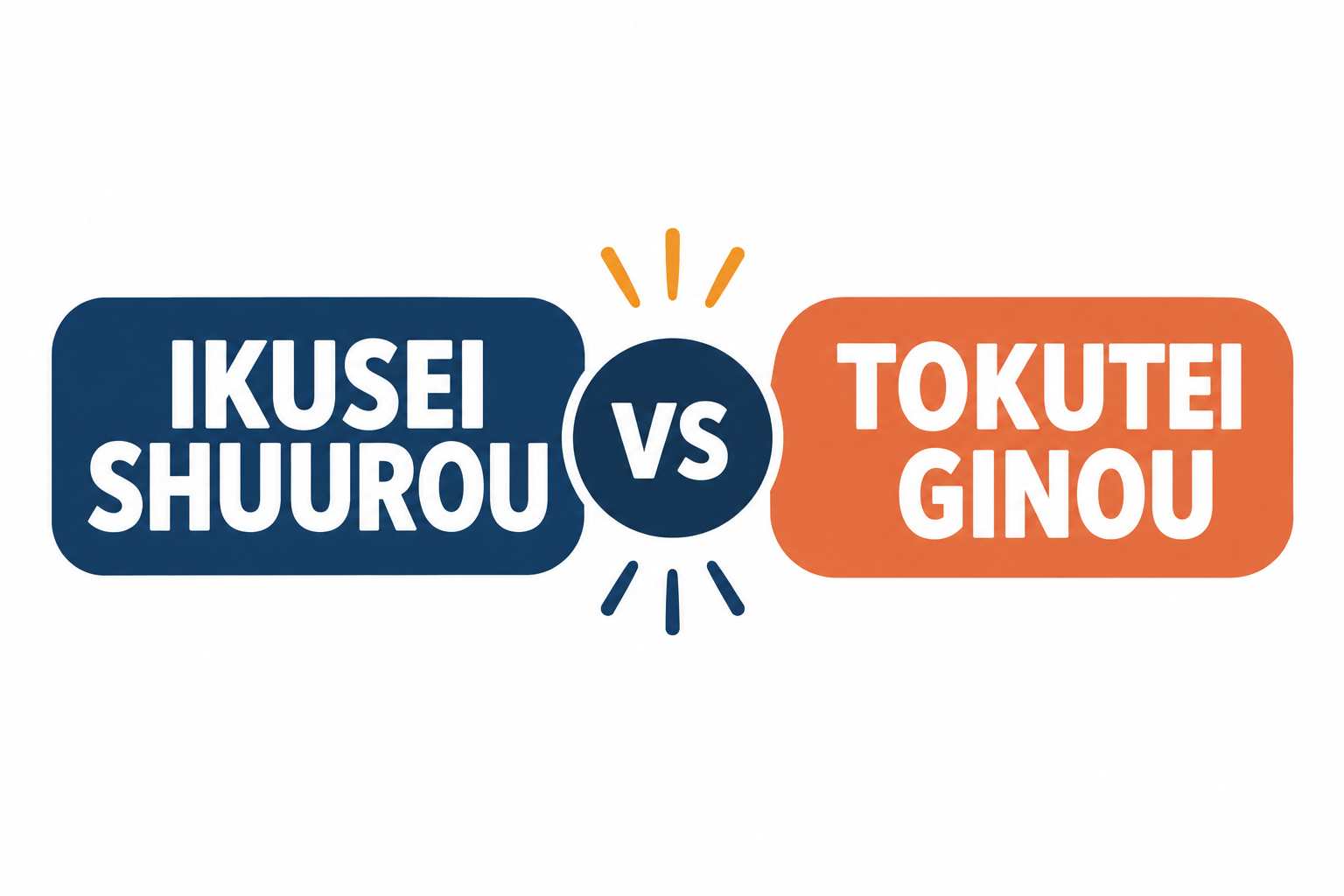
Japan is preparing to introduce the Ikusei Shūrō (育成就労) program, which is scheduled to take effect in April 2027. This program is designed to replace the Technical Intern Training Program, known as Ginō Jisshū (技能実習). Its purpose is to develop workers’ skills while addressing labor shortages across various industries in Japan.
One of the main objectives of this new program is to establish a more structured pathway for foreign workers to develop their professional capabilities in Japan. Through Ikusei Shūrō, participants are expected to improve their occupational skills and Japanese language proficiency during the program, creating opportunities to transition to the Tokutei Ginō 1-gō (特定技能1号), or Specified Skilled Worker (i) status.
In general, one of the key differences between Ikusei Shūrō and Tokutei Ginō lies in their respective objectives and the requirements participants must fulfill. Ikusei Shūrō focuses on developing workers’ skills over a specified period, whereas Tokutei Ginō is a residence status that allows foreign nationals who meet the relevant occupational skills and Japanese language requirements to work in designated fields in Japan.
Under the Ikusei Shūrō framework, the program can generally last up to three years. During this period, participants undergo training and engage in work to develop their competencies in their chosen industry. To transition to Tokutei Ginō 1-gō, participants must meet the applicable requirements, including Japanese language proficiency and occupational skills standards. Under certain circumstances, eligible participants may qualify for exemptions from some examinations when transitioning between the two programs.
For prospective Indonesian workers interested in this pathway, Japanese language preparation is an important consideration. Participants need to understand the language and occupational skills requirements applicable to their intended field of employment. The required Japanese proficiency level, including JLPT N5 or other applicable standards, must be determined according to the official requirements for each industry and recruitment pathway.
With the Ikusei Shūrō program scheduled to begin in April 2027, prospective Indonesian workers should start preparing early by developing their Japanese language skills, occupational competencies, cultural understanding, and readiness for the selection process. Proper preparation is expected to help them pursue employment opportunities in Japan in a more structured and sustainable way.
### What About Tokutei Ginō?
Tokutei Ginō is another employment pathway available to foreign workers. However, applicants pursuing this route generally need to pass the relevant occupational skills examination before departure. This means that Japanese language proficiency alone is not sufficient; applicants must also demonstrate the skills required for their intended occupation in Japan.
The general Japanese language requirement for Tokutei Ginō 1-gō is JLPT N4 or an accepted equivalent, such as passing the JFT-Basic examination, subject to the applicable requirements and any relevant exemptions.
### Have You Decided Which Pathway Is Right for You?
If you have not made your decision yet, join us at **LPK Hikkari Nusantara Japindo** and take your first step toward a career in Japan by starting to learn Japanese with us.
**Your Journey to Japan Starts Here.**
Dua jalur yang sebenernya sama, namun berbeda. Penasaran?
A sharing session with former technical interns to learn about Japanese life, culture, wor...